Rituals & Seasons
Makki Di Roti and Punjab's Winter Memory
Makki di roti is one of those foods that feels older than the question itself. In Punjab, winter made it feel inherited long before anyone stopped to ask how it arrived.
There was never a question about makki di roti.
It just was.
Winter came, and wheat stepped aside. Corn took over. The rotis turned thicker, rougher, less obedient. They refused the neat softness of everyday wheat, but no one complained.
Because makki was never only food.
It was season.
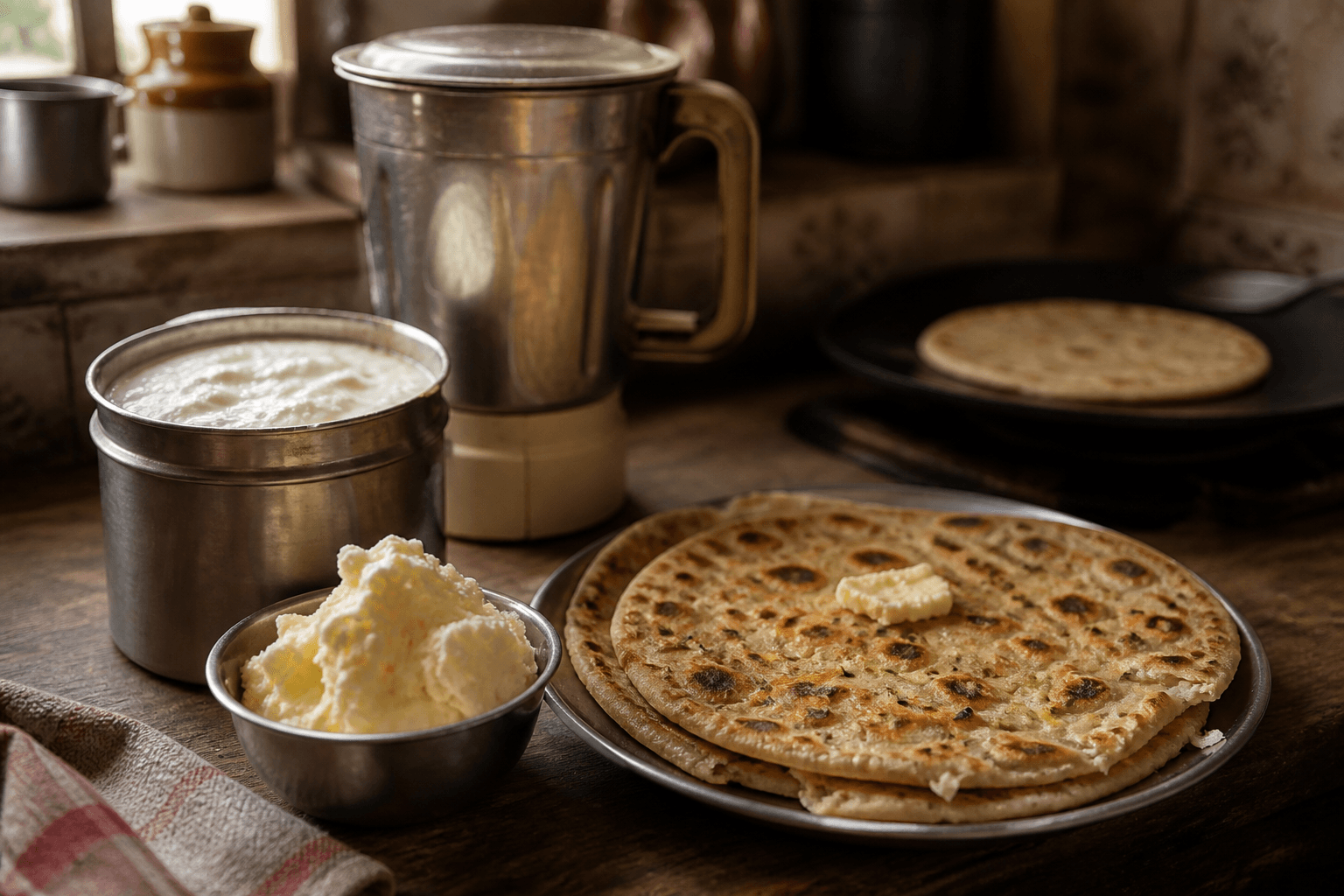
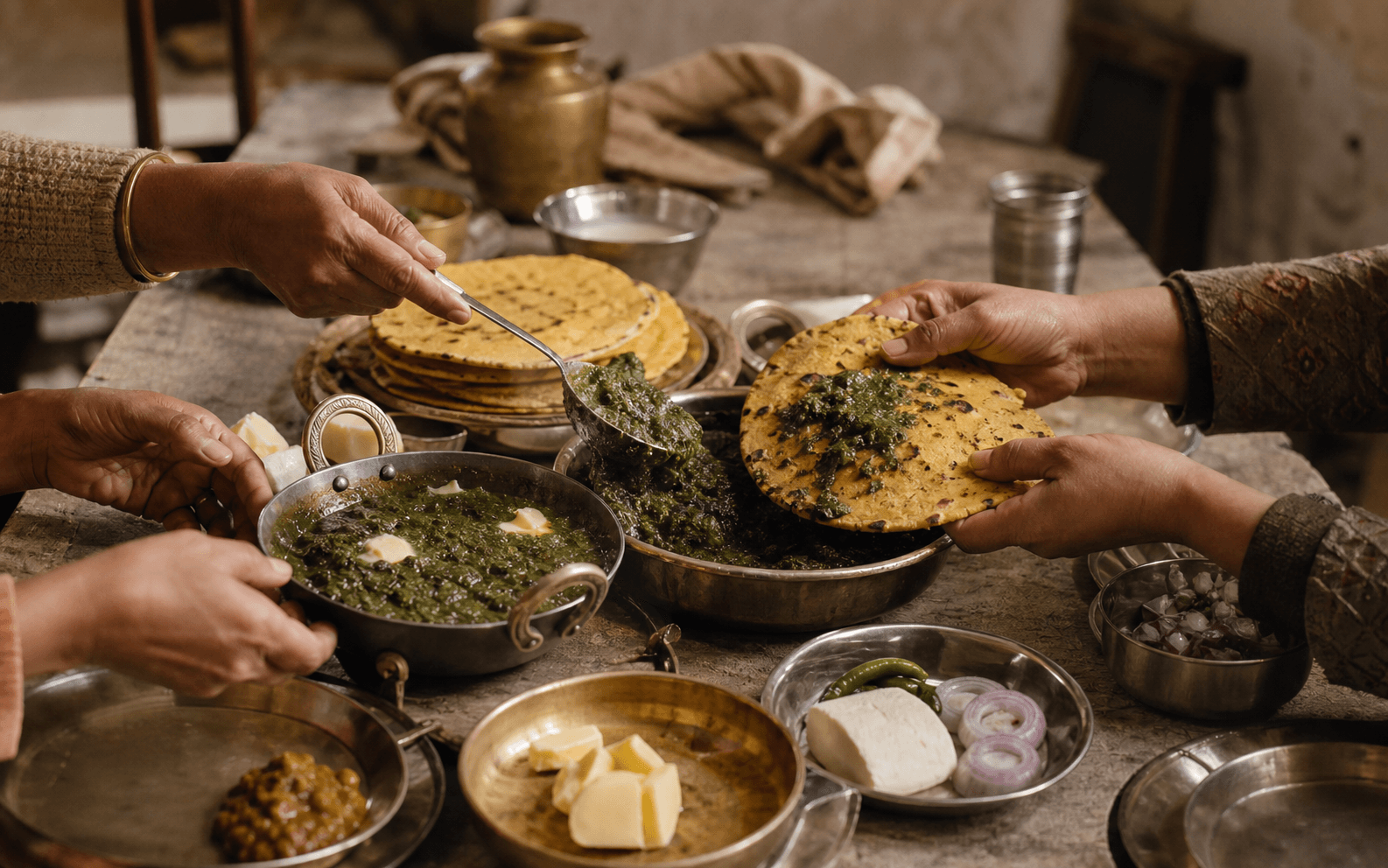
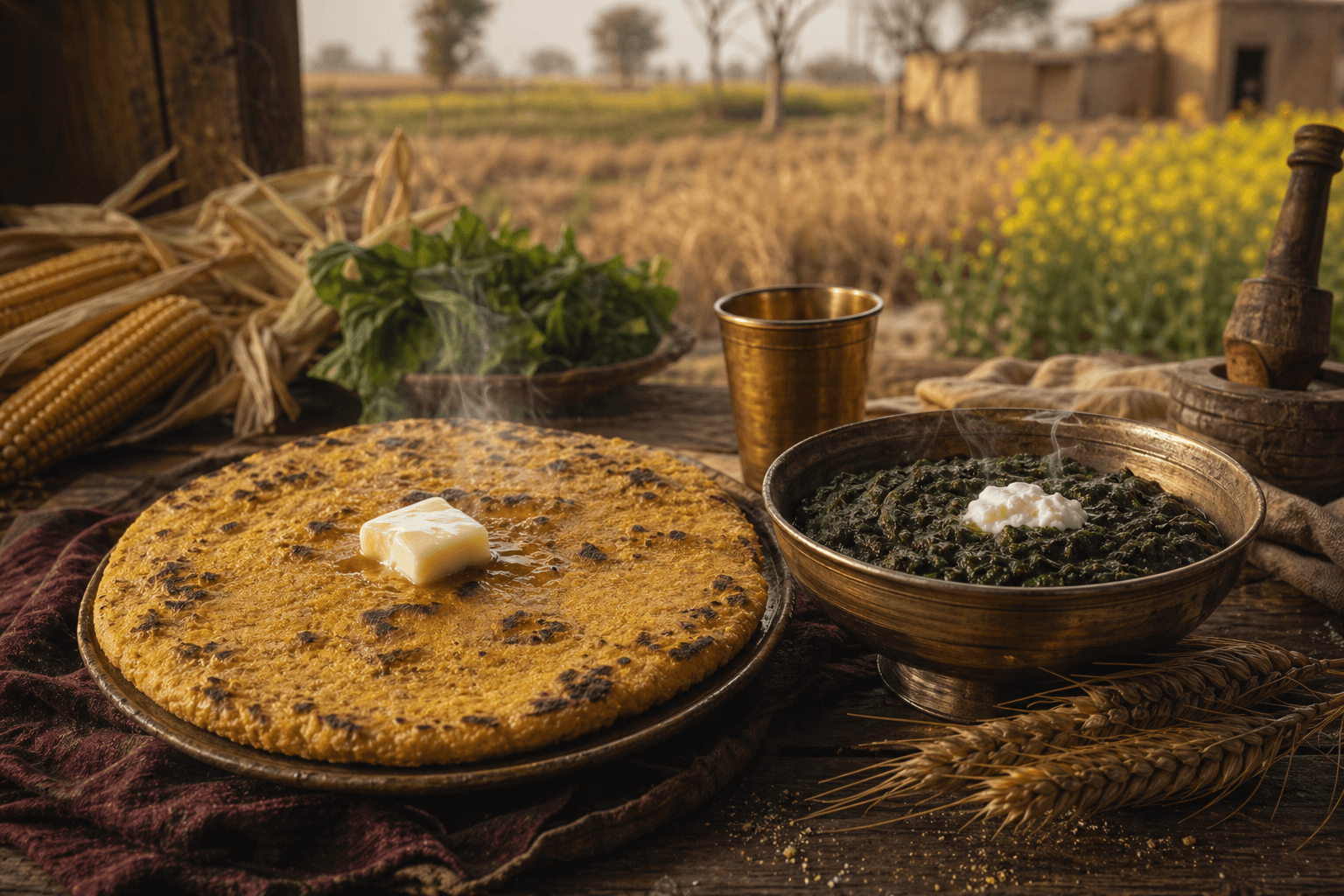
It was sarson da saag, white butter slipping into the heat before it could hold shape, and hands that knew how to work with dough that did not want to cooperate.
Growing up, it felt ancient.
Like it had always belonged to Punjab.
But makki did not begin here.
It arrived from elsewhere, crossing oceans after new trade routes changed what could travel and what could root itself in unfamiliar soil. It was not waiting for Punjab, and Punjab was not waiting for it.
"It didn't stay foreign for long. Punjab turned it into winter, and winter turned it into memory."
It had to be tested in the field and translated in the kitchen.
Farmers did not switch overnight. Wheat still ruled. Seasons still decided what mattered. But makki found a rhythm that Punjab understood - useful in winter, practical in the field, satisfying at the table.
Then kitchens did what kitchens always do.
They adjusted.
Dough cracked.
Rotis broke.
The early versions could not have been perfect.
But over time, makki stopped feeling imported.
It stopped needing explanation.
It became winter.
It became inheritance.
Today, no one tears off a piece of makki di roti and thinks about trade routes or migration.
It feels older than the question itself.
Maybe that is what culture really does.
It takes what arrives, lets it earn a place, and one day calls it home.
Historical note
Corn did not begin in Punjab, but trade, farming rhythm, and winter eating habits made it feel local enough to outgrow its own migration story.
This piece follows widely discussed crop-migration history alongside lived Punjabi food memory. It is framed as cultural journalism rather than academic citation.