Why We Eat This Way
Filter Coffee: Saat Beej Aur Ek Pyala
A brass filter, a morning cup, and the legend of seven coffee seeds carried across the sea to Karnataka.
Nobody smuggles coffee anymore.
Par kabhi kisi ne kiya tha.
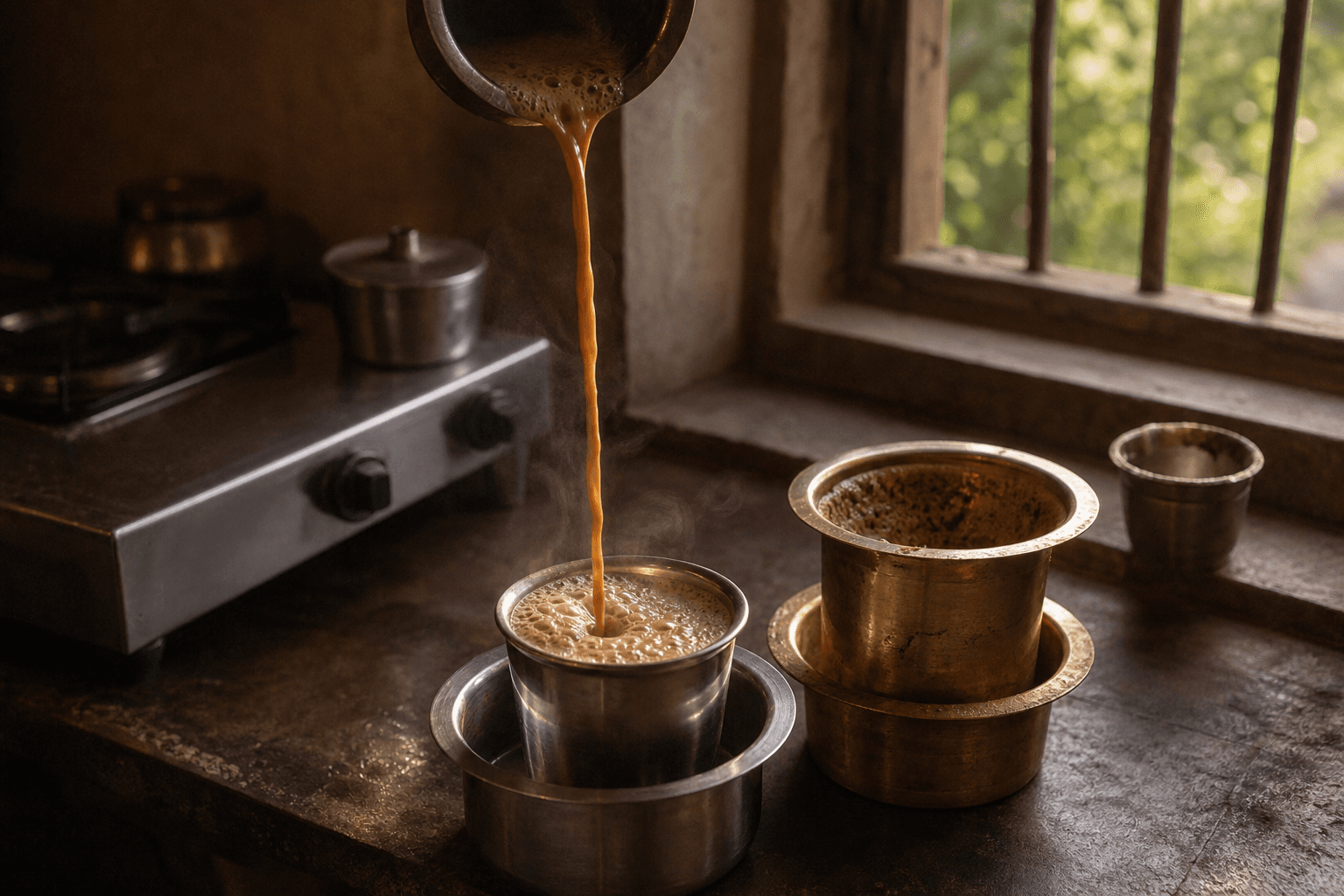
Kitchen mein brass filter rakha hota hai.
Do hisse.
Upar powder.
Neeche khaali intezaar.
Paani daalte hain.
Phir kuch nahi karte.
Bas wait.
Filter coffee jaldi nahi banti.
Uska apna time hota hai.
Boond boond neeche girti hai.
Thick.
Dark.
Almost black.
Ghar abhi poora utha nahi hota.
Par coffee uth chuki hoti hai.
Doodh side pe garam ho raha hota hai.
Ek chhoti si awaaz.
Ek steel ka chamach.
Ek vessel ka edge.
Subah apni jagah le rahi hoti hai.
Davara aur tumbler sirf bartan nahi hote.
System hote hain.
Coffee stir nahi hoti.
Pour hoti hai.
Upar se neeche.
Phir wapas upar.
Phir neeche.
Har baar thoda thanda.
Har baar thoda mix.
Har baar thoda zinda.
Foam dheere dheere upar aata hai.
Ek wrist movement hota hai.
Sahi ho toh smooth.
Galat ho toh aadha counter pe.
Ghar mein sabko pata hota hai kaun sahi pour karta hai.
Aur kaun bas try kar raha hai.
Smell pehle aati hai.
Cup baad mein.
Yeh smell alag hoti hai.
Na instant jaisi.
Na coffee shop jaisi.
Kuch aur hi.
Thodi kadvi.
Thodi garam.
Thodi ghar wali.
Aisi smell jo room mein nahi rukti.
Seedha memory mein chali jaati hai.
Pehla sip hamesha thoda garam hota hai.
Zubaan ko pata chal jaata hai.
Rukna padega.
Phir sip.
Phir thoda aur.
Coffee jaldi nahi peete.
Woh khud batati hai kab ready hai.
"Smell pehle aati hai. Cup baad mein."
1600s. Yemen.
Coffee ka control Yemen ke paas tha.
Beans bahar jaati thi — par roasted.
Zinda beej nahi.
Koi aur ugana nahi paaye.
Phir ek aadmi aaya.
Wapas aa raha tha.
Coffee pee chuka tha.
Aur le jaana chahta tha.
Allowed nahi tha.
Kehte hain usne chhupa liya.
Saat beej.
Bas saat.
Body ke paas.
Kapde ke andar.
Safar ke saath.
Ship pe.
Samundar ke paar.
Karnataka ke pahaadon tak.
Baba Budan Giri.
Aaj bhi naam hai.
Wahin laga diye.
Pehle bas plants the.
Kuch logon ke courtyard mein.
Kuch pahaadon ki mitti mein.
Commercial plantations baad mein aaye.
British planters baad mein aaye.
Industry baad mein bani.
Saat beej.
Ek aadmi.
Ek taste jo usse chhodna nahi tha.
Aaj jab coffee table pe aati hai, koi yeh nahi sochta.
Na Yemen.
Na Mocha.
Na samundar.
Na smuggling.
Bas cup pakadte hain.
Dono haathon se.
Foam thoda side pe chipka hota hai.
Neeche coffee garam hoti hai.
Bahar subah ho rahi hoti hai.
Andar woh smell.
Wahi wali.
Kisi ne saat beej leke samundar cross kiya tha.
Par usne yeh nahi socha hoga ki ek din kisi kitchen mein, kisi brass filter se, kisi ghar ki subah shuru hogi.
Usne shayad itna hi socha hoga.
Coffee acchi thi.
Historical note
Indian coffee memory is often traced to Baba Budan carrying seven Mocha seeds to the Baba Budan Giris in Karnataka around 1600, before commercial plantations developed later.
Historical note: The Coffee Board of India traces the beginning of Indian coffee to the planting of seven Mocha seeds by Baba Budan in Baba Budan Giris, Karnataka, around 1600. Commercial coffee plantations developed later, beginning in the 18th century.