Rituals & Seasons
Makhan: Jo Haath Se Banta Tha
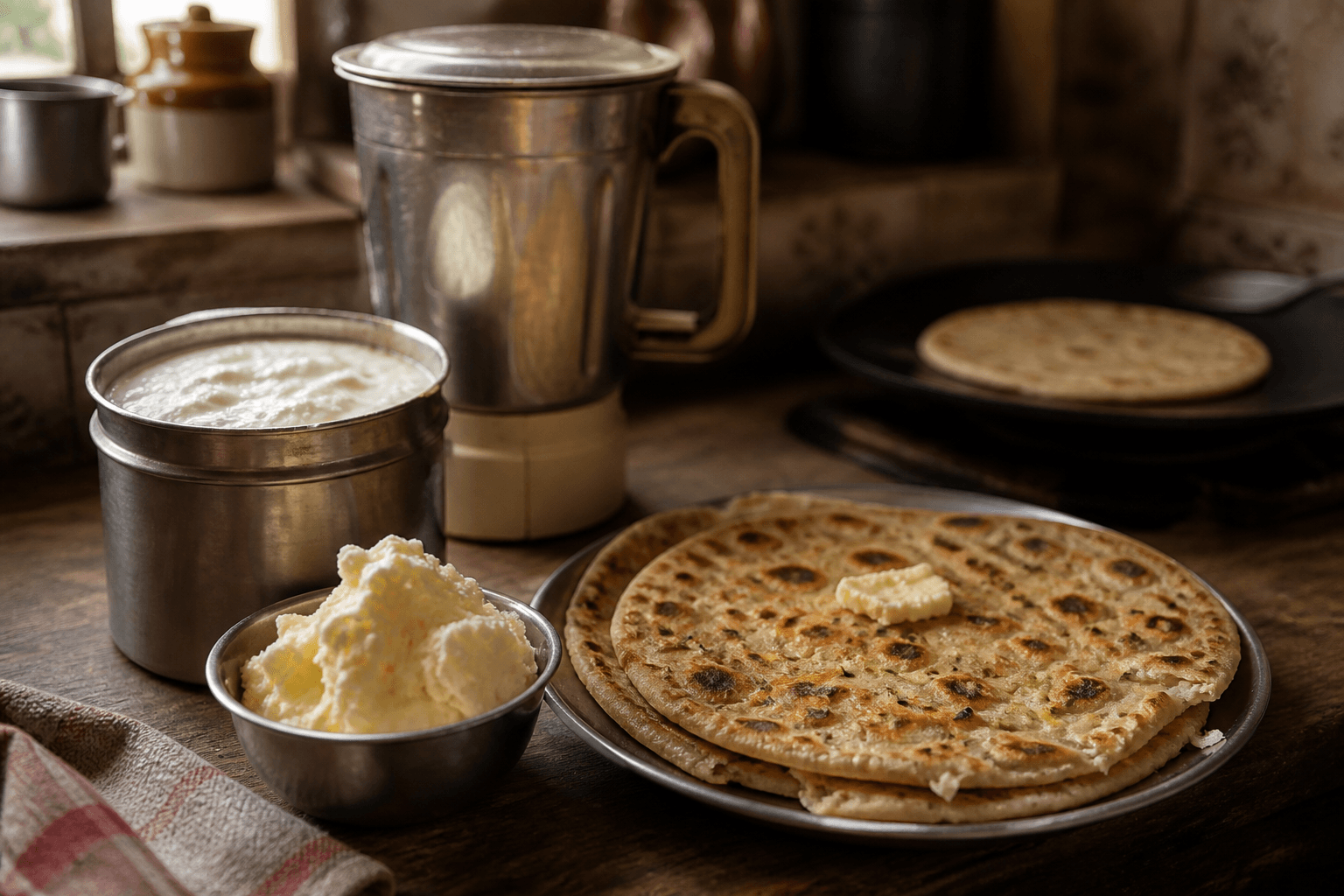
Malai collected all week, cold water in the mixer, makhan rolled by hand, and mooli paranthas waiting on a Sunday morning.
It started days before Sunday.
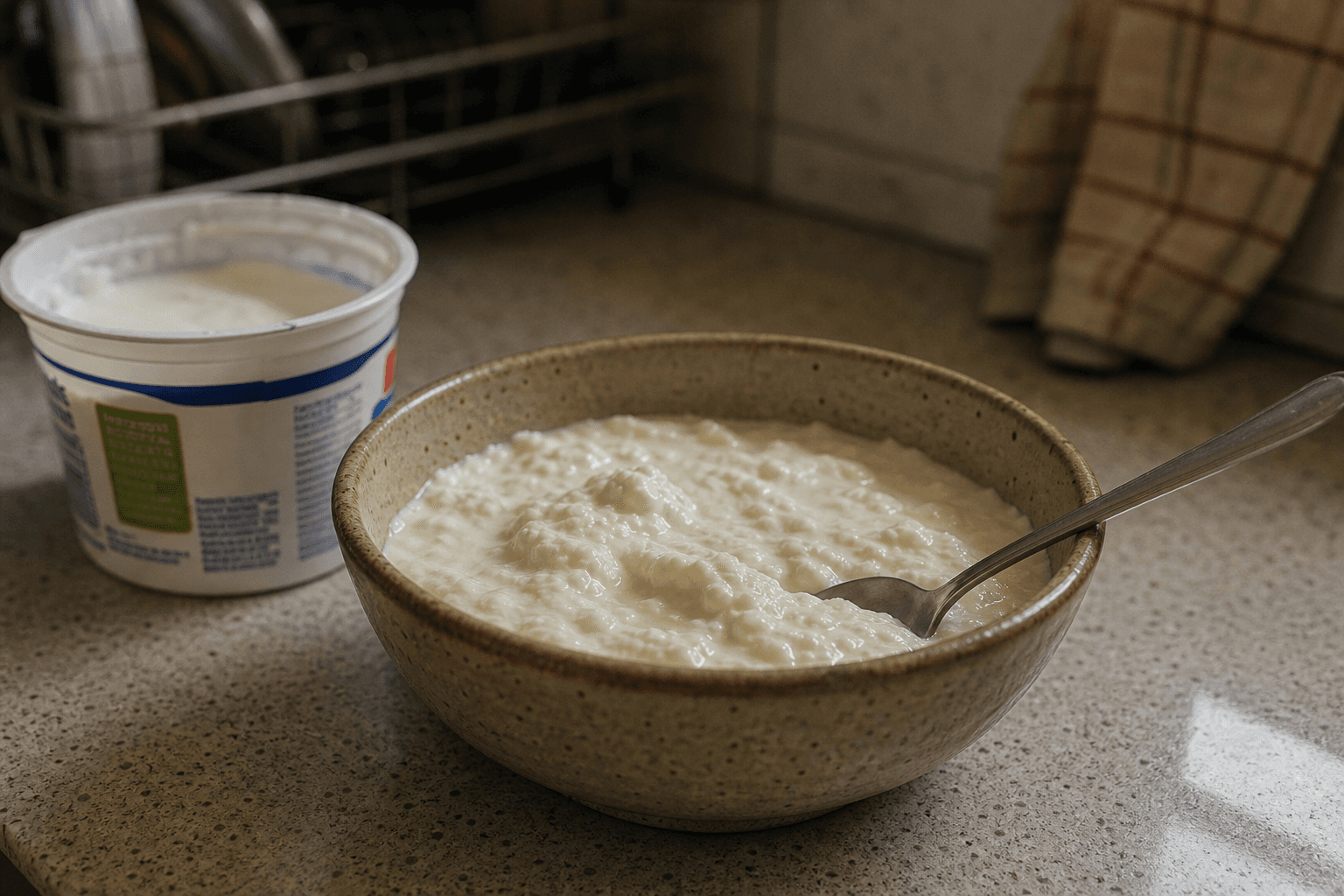
Every time the milk was boiled and cooled, the malai that floated to the top went into a steel container. Not all at once — a thin layer each time, lid back on, back into the fridge. Or in summer, when the fridge was unreliable or the power had gone, into whatever cold was available. Sometimes a block of ice from the ice-wala, the kind that arrived wrapped in jute and left a puddle on the kitchen floor. The container sat and waited and filled slowly, one layer at a time, across several days.
This required patience.
It also required discipline.
Because fresh malai — cold, thick, slightly sweet — was its own temptation. Not the makhan it would become. Just malai, the way it sat in the container before anything had been done to it. A spoon on bread was not a crime. A couple of spoons was a private transaction between yourself and the container that nobody needed to know about. The malai was earmarked for Sunday. A small amount redirected earlier was simply quality control.
Sunday morning arrived with its own sequence.
Mooli paranthas would come later — the mooli grated and spiced and sealed inside dough, the tawa already heating. But before the paranthas, before anything else, the malai came out of the fridge.
Into the mixer.
The mathani — the traditional wooden churning rod used for generations — had given way in many urban Punjab kitchens to the electric mixer. The sound was different. The effort was different. But the result, if done right, was the same.
Cold water was the key. As the mixer ran, cold water went in — ice cold, sometimes with actual ice if the fridge had been uncooperative that week. The cold was what made the fat pull away from the liquid and come together as one mass. The buttermilk sloshing separately, the makhan collecting on one side.
The mixer switched off. The lid opened.
Taking it out was the best part.
Not a spoon. By hand. The makhan was cold and solid and slightly slippery and the point was to gather it from the sides of the mixer jar and consolidate it — pressing it, folding it against itself, feeling it come together. Then the rolling. A ball, or as close to a ball as the warmth of the hands and the softness of the makhan would allow. Perfectly round was the ambition. Approximately round was the reality.
It sat in a steel katori, pale yellow, slightly glistening, smelling of fresh fat and cold and something that had no other name except makhan.
Then the paranthas came.
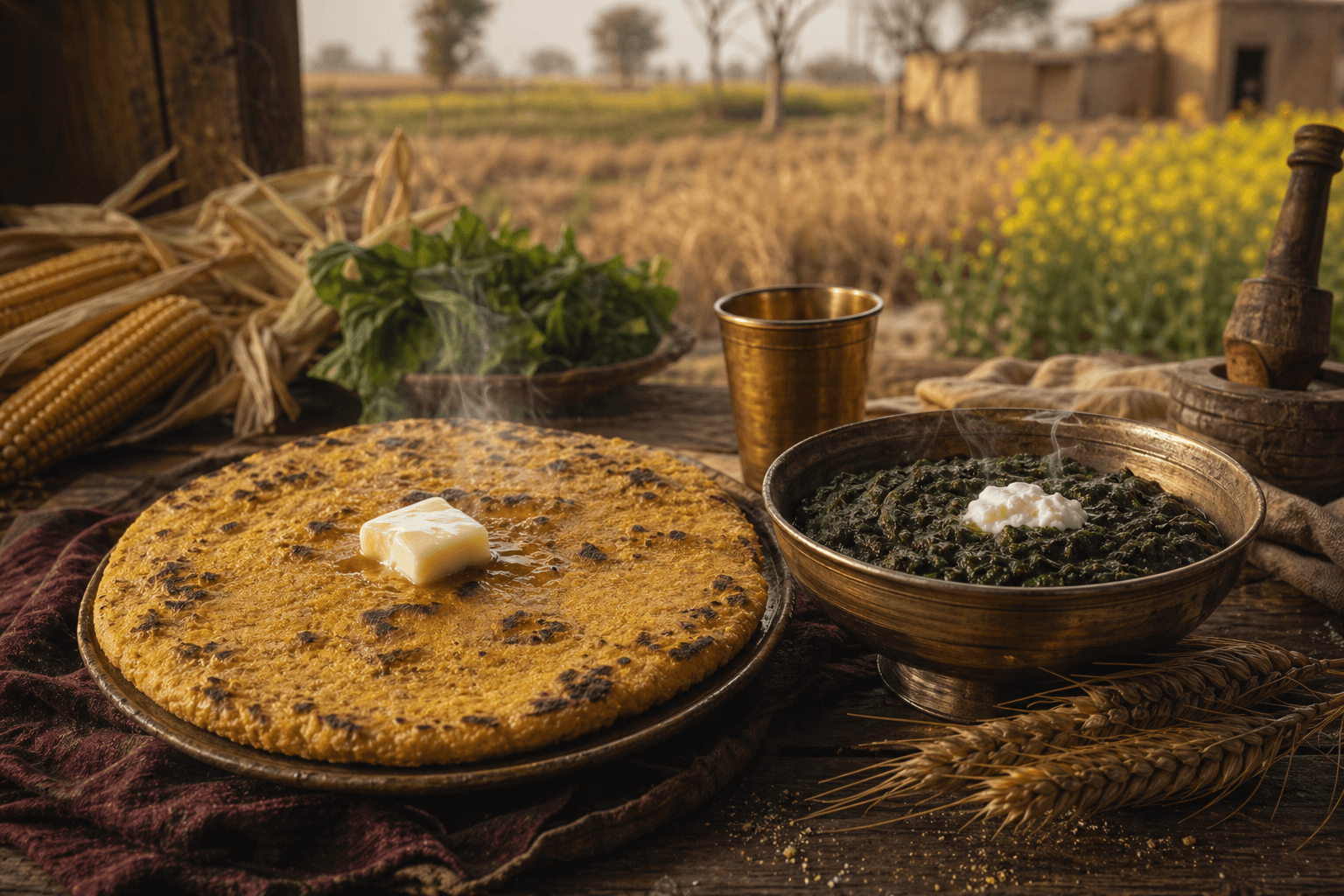
A mooli parantha and homemade makhan is a specific thing.
Not butter from a packet. Not anything that arrived in a wrapper with a nutrition label. Those are fine. They are not this. The homemade makhan melted into the hot parantha differently — faster, more completely, becoming part of the bread rather than sitting on top of it. The taste was cleaner and richer simultaneously, the fat having come from malai collected over several days in a household kitchen, carrying the slight variations of each batch.
You could taste the patience in it.
Homemade makhan has become rare in many urban Punjab kitchens.
Not because anyone decided to stop making it. Because the conditions that made it necessary changed one by one until the practice quietly became optional and then rare.
Packaged butter and cooperative dairy brands made butter easier to buy. What had once required days of collecting malai could now be picked up from a shop, already wrapped, consistent, and ready. Urban life accelerated and Sunday mornings filled with other things. The time the process required — the days of collection, the Sunday morning ritual, the hand-rolling of the makhan ball — started to feel like effort that could be redirected.
It could be. So it was.
What left with it was the specific flavour that comes from fresh malai, from cold water and cold hands, from a process that had no shortcuts because the shortcuts changed the result. Packaged butter is excellent. It is not the same thing. Anyone who grew up eating homemade makhan on a mooli parantha on a Sunday morning in a Punjab kitchen knows this the way they know their own name.
That steel container in the fridge.
The malai collected layer by layer across the week, the lid going back on each time, the discipline of leaving it alone mostly observed and occasionally not.
The Sunday morning sequence — malai out, ice in if needed, mixer on, cold water, the moment of separation, the hand reaching in, the rolling.
The katori on the counter. The parantha on the tawa.
The makhan melting before it even fully landed.
Some things that disappeared were replaced by something equivalent.
This was not replaced.
It was simplified.
And somewhere between the simplification and now, a specific Sunday morning taste became the kind of thing you describe to someone younger and watch them almost but not quite understand.